 Redcoat Syndicate
Why natural luffa.
It is a plant, it works, and when it is finished it goes back to the soil.
What is a luffa?
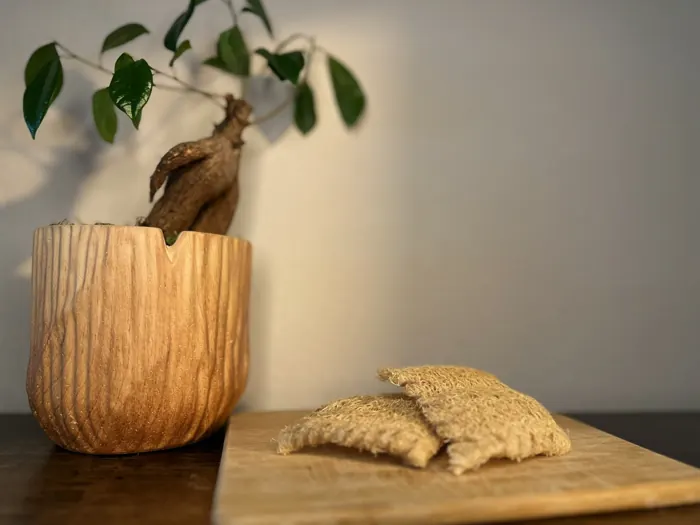
Luffa (also spelled loofah) is a gourd that grows on a vine, in the same family as cucumbers and squash. Picked young, it is edible in many parts of the world. Left on the vine to ripen and dry, the inside turns into a tough, open network of fiber. That network is the scrubber.
How it grows.
Luffa is a warm-season vine that wants a long, hot growing season and something to climb. The fruit hangs from the vine for months. When the skin turns from green to yellow-brown and dries, it is ready. We peel it, shake out the seeds, rinse it, and let it dry completely before we cut it.
Why it is a better choice.
Mesh shower poufs and many synthetic sponges are made from plastics, and they are thrown away when they wear out. A luffa is plant fiber with nothing added. It does not shed synthetic fibers, and at the end of its life it can be composted.
Natural exfoliation.
Dry luffa is firm. In warm water it softens and flexes, so it lifts away dull skin and lathers easily with soap. Use light pressure, skip broken or sunburned skin, and if your skin is sensitive, try a small area first.
How to care for it.
Rinse after use, squeeze out the water, and hang or stand it somewhere it can dry fully. A luffa that dries between uses lasts longer and stays fresher. We suggest replacing it every 3 to 4 weeks, or sooner if it smells off or shows any mold.
When it is done.
Cut it up and put it in your compost, or bury it in a garden bed. That is the whole disposal plan.